Showing posts with label feminism. Show all posts

Wednesday, 16 May 2012

The day I declare all women beautiful AGAIN, or why I will not EVER back down.

An open letter to those who think sexism is dead and the darn feminists need to stop being so angry:

I haven't been blogging much lately, so when I noticed that I was getting a lot of page views, and a few really angry comments, I was curious. The majority were from a web site called Single Dude Travel, which seemed odd, since I'm not single, nor a dude, nor do I write about travel. Turns out, they had just linked to me because I'm a "retarded feminist." They said I was too much of a silly idiot woman to take on directly, but they linked to an article that did. I will not link to them here, because they don't deserve the attention. But basically their response to my argument against fat-shaming was that I'm a fat lesbian, so OF COURSE I feel that way. From there, I found a link to an article that argued that women are not fit to participate in the public sphere (seriously!!!), and they used my blog post as a prime example--apparently, I'm too emotional to tell people they're ugly or obese, so I make up pseudo-arguments to make myself feel better. I shouldn't quote this guy, because he does not deserve the attention, but I have to, because I cannot make this shit up (Grey is the guy who called me a fat lesbian, and when the author refers to Feministing, he's talking about my post, not the whole site):
Grey’s argument was perfectly sound, but in a sense his engagement with Feministing is pointless. The author of the original post is a woman. Of course she’s going to say absurd things in order to ensure that no one feels bad. We should accept that. Often we ought to praise women for their sensitivities while ignoring their so-called arguments.
It's the ovaries. They give me the crazies. (Also, I love that he tries to make that seem like a compliment...?) Oh, but the problem with this logic is that I AM cool with making some people feel bad...like people who think I'm too emotional to participate in the public sphere... However, if he STILL feels that I am "hysterical," he could always send me a vibrator--I hear they used to use those to cure the "womb crazies" and stuff--I would gladly accept such, uh, medication for my "problem."

But my point is, people say these things. Maybe not to your face, because you said nothing to provoke them. Or maybe because they're scared. Or maybe you thought what they said was a joke. But it's not. As much as I laughed at what these guys said about me, this is not a joke. This is serious. PEOPLE STILL THINK WOMEN SHOULD NOT PARTICIPATE IN THE PUBLIC SPHERE. THIS IS REAL. It's extreme, I know. Most of you will be like, "But I support women working!" But, just as problematically, PEOPLE STILL USE FAT LESBIAN AS AN INSULT. And that's a mainstream opinion.

On the one hand, I kind of feel like I earned a badge of honour. I mean, you hear of feminists being accused of being lesbians all the time--you know, the whole we're-too-ugly-to-actually-get-a-guy thing, the we're-bitter-angry-ugly-lesbians thing--but no one had ever said that to me! I was feeling kind of left out. Now I can join the club. Interestingly, I actually find it highly problematic that I've never been called a lesbian before. Because that says a lot more about what a lesbian can't be than it does about me. I don't get called a lesbian because most people that I've engaged with in arguments about feminism have seen what I look like. I'm thin. I have long dirty blonde hair. I wear a bra and girly tops and tight jeans or short shorts or skirts and I have a lot of pretty, impractical shoes. I put on mascara and lip gloss daily. I have long nails and I shave my legs. I'm young and white and conventionally attractive. By not calling me a lesbian, people are essentially saying that the only women who are lesbians are those who do not fit into heteronormative beauty standards. They are saying that if you're deemed "fuckable" by men, then there's no way you could refuse the penis! But all these guys online know is that I'm "getting all emotional" about the "fat chicks" and their "feelings" so I must be a lesbian. A fat one, too. Sorry, sweethearts, I'm actually not a lesbian--I don't refuse all penis, just yours, you misogynistic fuckwads. (Come on, call me a slut now--I dare you.)

But, on the other hand, telling me (or, no, sorry, telling men behind my back) that my voice does not belong in the public sphere? You better be prepared for what you've started. I have never been more motivated to put my voice out there. Oh, and I'm a PhD student, too, or I will be in a few months, so you better believe that I have the avenues to do so. I will stir shit up. I'm only just getting started. You think that one blog post was something? I wrote that rant in twenty minutes. I never expected it to go viral; I was writing it for the hundred-odd friends and family that usually read my blog. You just wait and see what I can do when I actually put my mind to it. You will not break me.

Sincerely,

The thin white straight girl who STILL believes that ALL WOMEN ARE BEAUTIFUL
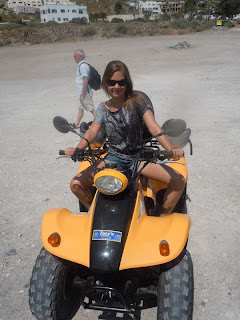


This is what a feminist looks like.


Tuesday, 15 May 2012

The day I was behind the times in the blogosphere, or why you should only date guys that like your creepy clay figurines. Or guys that are Jared Padalecki.

I knew this was going to happen when I started blogging. I would get excited about it for a few months, and then I'd get distracted and go weeks and weeks without writing anything, and then people would lose interest and no one would read it anymore and I'd get sad and panic about what exciting topic I'd need to write about to get people's attention again and then I'd never be able to think of anything cool enough because there would be too much pressure and oh dear god what should I write about?!?! I feel like I'm always a week or so behind on online trends and pop culture news or political news so I can't write about anything contemporary because everyone's already weighed in on those issues. The most recent movies I've seen that are worth commenting on are The Hunger Games, which everyone and their mother has blogged about, and What's Your Number?, which I watched last night but every other feminist blogger worth her salt has already talked about because it deals so explicitly with the politics of female promiscuity and includes the douche-bag-man-whore-misogynist-is-actually-a-nice-guy-once-you-get-past-his-emotional-baggage trope which I am very tired of because pretty much all of the douche-bag-man-whore-misogynists I've ever met are actually douche-bag-man-whore-misogynists and there is no way in hell I would put in the time and effort to teach them Feminism 101 every single fucking time they said something douche-y or misogynistic because I AM NOT YOUR FUCKING TEACHER (unless I am, in which case I will teach you Feminism 101 over and over again because they pay me to). That being said, What's Your Number? is actually a hilarious movie and is nice in a find-a-man-that-accepts-you-and-your-promiscuity-and-your-creepy-clay-figurines-as-you/they-are kind of way. Which, I think, is a very important message. Particularly the creepy clay figurines part. Because, lord knows, you should never date a guy that doesn't love your creepy clay figurines. That should be a rule in whatever the straight-girl opposite of the Bro Code is.

Anyway, aside from that, I've been watching Gilmore Girls and Buffy, and I feel like pretty much everything that needs to be said about both of those has already been said, especially Buffy. I went to the Popular Culture Association of Canada conference in Niagara Falls this past weekend and THERE WERE NO PANELS ON BUFFY. It's like all the scholars in Canada were just like FUCK IT, WE'VE SAID IT ALL. I don't know if that's true. But I certainly have nothing new to contribute to that discussion. Although I read an article on After Elton this morning about the five gayest episodes of Buffy and they seemed kind of arbitrary to me. Like...Willow is openly gay for the last few seasons. So pretty much all of the episodes about her in the last few seasons are gay, aren't they? Or I am misunderstanding what makes an episode gay? Their reasoning seemed all over the place... "lots of naked boys!" and "gay actor as central character!" and "Willow's gayness is hinted at vaguely long before she comes out!" seemed to all be valid reasons. Anyway, my point is, I feel like that list could have been a lot longer than five. Or it should have had more specific criteria. Do they mean the episode features queer characters? Do they mean there's a lot of eye candy for queer men? I DON'T KNOW. So I guess I had something to contribute to the discussion about the discussion of Buffy. We're into meta-discussions now. My head hurts. I also watch Weeds and Supernatural, but I'm not up-to-date on either of those, so my comments would be behind the times. But watching the first and second seasons of Gilmore Girls at the same time as watching Supernatural is WEIRD. (Not at EXACTLY the same time--I can't multitask like that...obviously...) Jared Padalecki goes from being tall, skinny cute boy to SUPER MEGA HOTTIE MAN. Also, the wrong person is named Dean in Supernatural. Very confusing. I refer to the two main characters in Supernatural as Dean and Sam-Dean. It's weird because I've had friends who have changed their names and I adjusted to that very easily but I can't adjust to a character on a TV show changing his name when he's on another TV show. And neither of those names are actually his name. His name is Jared. Which is a stupid name, if you ask me. It does not fully describe his hotness. Jared is not a hot name.

Well, for someone who has nothing to say, I've certainly managed to say a lot. I think that's why I decided to start blogging in the first place. It's style over substance. It doesn't matter what I say, as long as it's somewhat entertaining. It's an nice shift from academic writing, where I'm trying to write something substantial about the Backstreet Boys which is like an oxymoron or something. Also, I'm finding it super weird to write about how they were marketed. I mean, it's one thing to analyze their songs or their music videos, because that was the "art" that they put out there to be consumed and talked about. But when I'm talking about how their personalities and relationships were marketed, it feels weird. I forget I'm talking about real people. Like Nick Carter exists, in the real world, as a person, and I have no idea how much of what was written about him in the 1990s was actually him, and how much was manipulated and fabricated to create a certain image. I'm having an ethical and existential crisis here.

Maybe staring at a picture of Jared Padalecki will solve my crisis...


You'll always be Dean in my heart.

Sunday, 4 March 2012

The day I wrote about bodies again, or why our bodies are not the enemies of our "authentic," inner selves.

As I'm sure many of you have as well (depending on what demographic your computer thinks you belong to, I suppose...), I have seen this ad pop up on various web sites I've visited over the last little while:


Usually the image is accompanied by a flashing line of text proclaiming: "53-year-old woman looks 18!" or something along those lines. Obviously it's ridiculous. Obviously no anti-aging cream is going to be able to scrape your age off and show the inner 18-year-old that was hiding underneath. Obviously this is just one of those absurd ads that pop up when you visit web sites to illegally stream TV shows...at least this is better than the fake Facebook chats with the teenage girls with giant boobs, amiright?

But this image got under my skin. (No pun intended...heh.) The message it conveys is not only that being--or, more specifically, looking like--an aging woman is inappropriate or gross or something that needs to be fixed, but also that underneath our inappropriate, gross bodies is an "ideal" person, a person we can identify with, that's just waiting for us to take control of our unruly bodies and let her out! A divide is created between the body and the person within.

Advertisements and images like these employ the rhetoric of celebrating inner beauty and people's "real," admirable identities, but they paradoxically are still focused solely on physical appearance, and on modifying your physical appearance to match your "authentic self." Old people are told to reveal their inner 20-year-olds, fat people are told to let their inner thin person out, as if their grotesque bodies were hiding their authentic, ideal, heterosexually desirable and properly "controlled" selves somewhere under the soft, deep wrinkles and rolls of fat. This is not teaching us to celebrate our inner selves. This is teaching us to hate our bodies, to fear our desires and appetites and our need to consume, to expand, to expel, to decay and to rot.

We need to talk about what it means to live in a body in a culture that tells us we can rise above our bodies and leave them behind, that we are somehow "better" than our bodies, that if we try hard enough we can modify our bodies to look 20 when we're 53 or to be a 36-24-36 no matter what size we started out at. We need to have this conversation because we can't do these things. And we will fail, our bodies will fail, over and over again.

This is not a post to tell you that you need to come to terms with your body in its "natural" state, that you need to love your body and accept your body as it is and everything will be sunshine and rainbows and we'll all live happily ever after. I was criticized by a few people about my previous post on "body image" and "real" women because they felt that I was suggesting that everyone should find all bodies beautiful all the time. Although I can see where those people were coming from (particularly if they were not differentiating between "finding someone beautiful" and "being sexually attracted to someone," which is a whole other discussion to be had), I am not that idealistic, nor am I against body modification, which is what that interpretation of my argument seems to suggest.  Rather, I think we need to have a more nuanced conversation about body modification, one that finds a middle ground between "do it to let your inner self out!" (or the super individualistic "do it because you want to and no one can tell you your choices are wrong!") and "never ever do it or you'll be a slave to the patriarchy!" We need to open up the floor for a more complex discussion regarding what it means to have a body, to live in a body, to be a body, to find pleasure in a body, in this culture. We are past a point of being able to be wholly "natural," but that doesn't mean we should employ every technology possible to force our bodies into some sort of cultural "ideal." These "ideal selves" are not our ideal bodies; becoming these ideals, or looking like these ideals, if it is even possible, will not make us better, happier human beings. We need to create a space where we can be at home in our bodies, where we can find pleasure in our bodies, where we can be our bodies and not be divided from them. This, in my mind, is not antithetical to body modification, although it does require a new language for talking about body modification, one that isn't centred on "perfecting" the body or disciplining the body to reveal your authentic self. Feminist philosopher Cressida Heyes (whose work gave me the framework to articulate how I was feeling about the image at the beginning of this post) argues in her book Self-Transformations: Foucault, Ethics, and Normalized Bodies that we need an "alternative language for interpreting one’s own body" that doesn't place our "identities" in opposition or competition with our bodies. She advocates for embodied pleasure, for "a way of being in the world that requires active cultivation, against forces that would domesticate and normalize any possibility of experience that deviates from practices usually considered to be the proper sources of happiness or joy," and I am so with her on that.

Friday, 24 February 2012

The day I wrote about boy bands, or why grad school is hard and kittens and celebrities are fun.

As I sit here attempting to write my major research project proposal (it's like a proposal for my master's thesis, but it's called a research project because it's shorter than a thesis...it's just semantics), I keep catching myself devaluing my own research topic, and I feel like that's really detrimental to this process. You see, I'm writing about boy bands. And that's usually how I present my research interests to people: "I write about boy bands!" And then I wonder why people don't take cultural studies seriously, when clearly I don't. I don't bother to tell anyone the context in which I'm researching boy bands, nor do I even explain WHY I'm researching boy bands. I suppose you could call it's self-preservation... If I don't admit that my research is actually grounded in anything serious, then no one expects anything of me. Set the bar low, then you can't fail, right? Plus then I don't have to actually try and "talk smart"--I don't have to talk about critical theory out loud, I can just hide in my apartment with stacks of books around me and write about theory there and never tell anyone. Because if I don't tell anyone, no one can judge me.

But now I have to write this proposal...which has to explain to other people why the hell I'm doing this. And I find myself doing the opposite of what I was doing before. I know, deep down, that I'm not doing this for silly reasons. But I keep making these bizarre qualifications, like that "the queer potential of boy bands is not an excuse to celebrate them" or something along those lines. Which, I mean, is a fair point, I suppose--I'm not arguing that everyone needs to love boy bands immediately because they're the best thing ever. But is that ever anyone's argument in an academic context? People writing about Judith Butler or Derrida or, I don't know, George Orwell are sitting there thinking OMG HOW CAN I MAKE SURE PEOPLE KNOW THAT I'M NOT JUST SOME HUGE FAN AND THAT I ACTUALLY HAVE SOMETHING IMPORTANT TO SAY. Because like seriously? Do people ever write about things they don't enjoy? C'mon, you know y'all are fans of Judith Butler. I am. (Okay, I've never said "y'all" before in my life. I'm from Ontario, not Texas.) And the nature of writing about anything you like in an academic context is, sure, you praise it when it deserves it, but you deconstruct it. You critique it when it deserves it, too. Obviously I am not just writing: "Boy bands are cool because gay boys and straight girls love them and everything gay boys and straight girls do on their own is awesome because they're both marginalized in a sexist, homophobic society. Yay!"

 If you'll allow me to analyze my own behaviour for a moment (not that I'm really asking--I'll write this whether you want me to or not! Muahaha...and they said the Internet would be a democratic space...), I think the reasons behind my attempts to defend (or avoid speaking about) my research are twofold. First of all, despite all of the changes in academia within the past few decades, particularly with the rise of cultural studies, popular culture is still not "serious" enough. For all the talk about not condemning people for having "mainstream" tastes, academics sure like to talk about how obscure and artsy their tastes are and how informed they are about things taking place outside the mainstream. Sure, that's a huge generalization, but as Carl Wilson argues in his book Let's Talk About Love: A Journey to the End of Taste (it's about his allergic reaction to Celine Dion), people's cultural capital nowadays depends on their ability to be a cultural omnivore. You need to be able to discuss Buffy or Dr. Who or Lost or Community as well as independent films and documentaries and local bands and also have a working knowledge of classic literature and classical music and Renaissance painting. And if you can only discuss the first bit...the "pop culture" stuff...well, you might just be "mainstream." Now I feel like I'm critiquing hipsters, not academics. But I feel like in both categories, similar feelings manifest themselves in somewhat different ways.

And here's the big catch, that leads to my second point: Never should you discuss Gossip Girl or Justin Bieber or Friends with Benefits or Confessions of a Shopaholic. (Disclaimer: I love GG, I like Justin Bieber, I saw Friends with Benefits and I read Shopaholic but it made me want to shoot someone. Not that that means you can't like it.) Regardless of what other shows you watch or bands you know, this is cultural suicide. And yeah, boy bands fit into this category. And you wanna know why? I'm sure there's a long, complex answer I could give, but the gist of it is this: Because that stuff's for girls. And by girls, I specifically mean girls, not women (despite the fact that our culture seems to think it's totally appropriate to call any woman, regardless of her age, a girl--that's not infantilizing at all, is it?). As Diane Railton argues in her essay "The gendered carnival of pop," pop music
is temporally bounded, seen only as a fitting taste for very young women. The pleasures of 'pop' are something that we must learn to grow out of.... [And it] is not only the music that must be left behind, but the physical, the sexual, in the music. The feminine in music must be abandoned as women grow up. It is only permissible for girls and young women. (2001: 330)
And this is why, Railton argues, pop music is not a threat to "real" music, and therefore will never be considered "serious," as a pastime or as an academic subject:
The carnivaleque of pop can provide no real challenge to the masculine world of popular music [meaning rock music or rap or anything popular that is marketed to and enjoyed by men] until it becomes acceptable not to grow out of 'pop pap music,' but to carry its pleasures with us into adult life. (2001: 330)
So this is what I'm up against, y'all. (There, I said it again. I DON'T TALK LIKE THIS IN REAL LIFE. The voice in my head is apparently some sort of combination of a Southern girl and a Valley girl.) And then there's the whole feminist argument that the third-wave tendency to praise anything that's girly just to elevate "girly" to the same status as "boy-y" (or, you know, masculine) is kind of useless because it's not critiquing the "girly," it's just putting it on a pedestal. Which is totally a fair point. So, it's a struggle. And I mean, really...I do understand, to a certain degree, why people might balk when they hear I'm researching people who dressed like this:


Like, seriously, Justin? This makes the fedora obsession look normal.

Anyway, if you are having similar struggles to me, know you're not alone! Here are two other posts I've come across from women experiencing some of the same issues: Maria Bustillos on romance fiction and Chloe Angyal on romantic comedies.

Also, I've found that looking at pictures of cats up for adoption in local shelters is very therapeutic. If you're in my area, look! and look! I want one but Jimmifer says I can't have one until we move into a bigger place. Which is probably a good idea because I don't want to have a litter box in my kitchen. And my kitchen is sort of in my office/living room. *Sigh*

Also, another exciting distraction is Suri's Burn Book (a Tumblr dedicated to all of the celebrity children who "disappoint" Suri Cruise) because it's awful and mean and vapid and who does not love a five-year-old that can pull off this much attitude:


this much poise:


and these shoes:

The girl is a force to be reckoned with.

Reading week needs to end. I cannot be left alone in this apartment to do work any longer.

Saturday, 11 February 2012

The day I declare all women BEAUTIFUL, or why YOU are beautiful, full stop.

So here's the thing. This picture that's been circulating around Facebook...


...is BULLSHIT. (When did this become a blog about shitty pictures that get spread around Facebook? Oh well. I'll roll with it.) I know that not everyone who has posted this has been all "OMG THIS IS SO EFFING TRUE LOVE YOUR BODY <33333333" and that many people have used it as a jumping-off point for more critical discussion about fat shaming and such, so if you did post this, please don't think that I'm personally criticizing you. I just felt the need to jump in on this discussion. Because I get that SOME PARTS of this message need to get out there. I understand that Western society needs to understand that the average woman is a size 16, not between a size 4 and 12, and it is absolutely absurd that the fashion industry continues to dismiss the majority of women by employing "plus-size" models that are, in actuality, smaller than the average woman, and relegating women's clothing over a size 12 to speciality "plus-size" stores, meaning that most women cannot shop in "regular" stores. And that is absolute bullshit.

However, other parts of the message promoted by this image are EXTREMELY problematic. First of all, it kind of seems to be promoting the idea to women that it's okay to be a little bit bigger than your "ideal" size because men are okay with it. I'm sorry, did I miss the meeting where we decided that men get a say in how women feel about their bodies? 'Cause I'm not on board. My confidence in my body will NOT depend on whether on not the majority of dudes think I'm fuckable.

Second, putting aside the  dress sizes of these women for a moment, all three of these women fit conventional Western beauty norms. Long hair (windblown, too!), clear skin, no body hair, no cellulite, no wrinkles...and it appears as if all of their breast-waist-hip ratios fit the so-called ideal. Note that on the size 16 model, her waist is noticeably narrower than her hips, and her breasts stick out much more than her stomach. As one Facebook commenter astutely pointed out: "I actually think they're all beautiful - and I don't think that EVERYONE's beautiful." My point exactly. What if the "national average" woman had smaller breasts? What if she carried her weight more in her stomach area than in her breasts, hips and butt? What if you could see cellulite on her thighs? What if she hadn't shaved her legs or pubic area? What if she shaved her head? What if she had a unibrow? What if she had visible scarring? What if she had acne? What if the skin on her arms sagged, what if her breasts sagged, what if she was wrinkled? What if she was over thirty? What if her skin was darker? Would you still fill the comments section under this photo on Facebook with "OMG SHE'S NOT FAT SHE'S SO BEAUTIFUL!" She's beautiful because her appearance fits our cultural understanding of beautiful--and that does not include being fat, hence the tendency to say, "she's not fat, she beautiful," as if the two were antithetical. Hey, guess what--saying, "she's not fat, she's beautiful," is STILL FAT SHAMING because you're saying that if she were fat, she would NO LONGER BE BEAUTIFUL.

This leads me to my third point: the largest woman in this picture is only the (American, I'm assuming) NATIONAL AVERAGE. Which means that a large percentage of the population is bigger than the woman on the right. What about those women? They're not "ideal" nor "average" and therefore they are left out of the conversation? There are beautiful size 18, size 20, size 24 and beyond women. But we cannot talk about that because then we'd be forced to admit that women CAN be beautiful AND fat. Because, guess what--some women ARE fat. And that's fine. And that's beautiful. But this photo, like most of our conversations about body image and body acceptance, refuses to go there. And that's a problem.

My fourth and final point is that while this photo does open up the discussion around "average"/"plus-size" women's beauty, it also opens up a space to critique the bodies of women who fall into the size-8-and-below category. One commenter explicitly said, "I would NOT want to look like the chick on the left." That's totally fine--I don't want to look like someone that's not me either--but the implication is that she looks sickly, she's unattractive, she's anorexic, she's not a "real" woman because "real women have curves" or whatever. I am not trying to suggest here that the positive body image movement (or whatever you want to call it) is like "reverse fat shaming" or anything ridiculous like that. That would be like claiming that because I'm a Hanson fan I understand what it's like to be the victim of homophobia because when I "come out" to people as a Hanson fan I am usually openly criticized for my preferences and asked a bunch of idiotic questions about why I like them and whether or not I'm sure I like them and that it's not just some side effect of a childhood trauma that has made me incapable of maturing past Hanson fandom. (I have to admit, I went to a Hanson concert last night--but creative analogy, right?) Queer-identified people are faced with systemic oppression and homophobia, whereas Hanson fans are ridiculed but it has no lasting impact on their lives nor does it inhibit their access to any aspect of daily life. Similarly, fat women are faced with a lovely combination of fat-shaming and misogyny, whereas thin women have a lot of thin privilege, and when other women criticize them or call them "anorexic" or tell them to "eat a burger," it may hurt, but it does not limit their access to, well, anything, really. Being too small to shop in "plus-size" stores is not a systemic issue. However, it is still problematic to open up a space where insulting thin women for being thin is acceptable and it is highly problematic to suggest that any woman is not a "real" woman. For more on this topic, go here and read Kate Bartolotta's take on this (she actually looks at another hugely problematic photo that's been circulating around Facebook lately and that more explicitly insults skinny women). And I'm serious. Go read it. I just spent like 15 minutes looking through my browser history to find that link. Anyway, this photo should NOT be used as an excuse to tell any woman that she is not real or that her body is somehow offending those attempting to cultivate positive body image. A woman's confidence in her own body should not come about comparatively--whether it's comparing her body to the national average, to what men deem fuckable, or to what other women's bodies look like. And keep in mind what I said earlier--all of the women in this photo fit OTHER standards of beauty. The woman on the left is conventionally attractive in ways that other skinny/thin women are not. Also, she is quite tall, so she is much thinner than most women who fit into the size 4 to 8 category (I doubt this was an accident--the taller she is, the skinnier and more "sickly" a size 4 to 8 looks). Not that I am suggesting that this is a problem--she is beautiful. The message is not.

Wednesday, 4 January 2012

The day I was feminist enough, or why refreshing, rethinking and redefining feminism can be a disaster or it can be AWESOME.

So I was going to write a post about family and the holidays and all that stuff as my first post back from vacation but then last night I stumbled upon this website and I decided to write about it instead.

The website is called "I'm Feminist Enough..." and it currently features three videos of women finishing that sentence. Like "I'm feminist enough not to judge other women" or "I'm feminist enough to  paint my nails before I go camping." Shannon Washington, the creator of the site, was inspired (or provoked) by Beyonce's comment in an interview sometime in 2011. When asked if she was a feminist, Beyonce said:
I don’t really feel that it’s necessary to define it. It’s just something that’s kind of natural for me, and I feel like…you know…it’s, like, what I live for.... I need to find a catchy new word for feminism, right? Like Bootylicious.
Washington found this rather troubling. What's wrong with feminism? But Washington says that for "many women of color, especially young women, the word 'feminist' provokes an image that is antiquated, overtly-aggressive, anti-male and white." (You have NO IDEA how much it pains me to write "color" instead of "colour" when I'm quoting someone American.) But, uh, to me, "bootylicious" provokes a highly sexualized image of women. Something new and different! (That was sarcasm...) So Washington decided that it was time to rethink and refresh feminism, specifically for women of colour. (HA. Spelled it my way. Paraphrasing is super cool.) And thus "I'm Feminist Enough..." was born! Washington writes:
Using video and still imagery, the 'I’m Feminist Enough…' project seeks to visualize the fresh face of feminism and demonstrate to our young sisters (and brothers) the value of feminist thought in our daily lives in a manner that is simple, sexy, modern and easy. Yes, you can be a feminist but get a kick out having the door held open for you. These actions don’t define your place as a woman, you do.
Awesome. But this isn't just a post advertising this site (although it kind of is...). I have some thoughts about it.

Obviously, I am not a woman of colour (well, actually I suppose that wasn't obvious until right now since you can't see me...), and I want to start by saying that in no way am I attempting to speak on behalf of anyone else. Feminism has not always been kind of women of colour, and it still isn't (remember some of the incidents at Slutwalk?), and I acknowledge that and in no way want to excuse that. However, I do want to think about what feminism means and what movements like this one that "refresh" feminism are doing. This website sparked ideas that I've been thinking about for a long time, so I'm taking my ideas and running with them, but I do not mean to erase the really fucking important shit that Washington is addressing when she talks about redefining feminism for women of colour. 

So I think I could look at this "I'm Feminist Enough..." movement one of two ways. First of all, the cynical way. I could say that these videos are promoting the idea that as long as a woman (or man or anyone else) calls herself a "feminist," then everything she does, from shaving her head to paying her own bills to running a company to painting her nails before going on a camping trip, is a feminist or radical act. And I have a problem with that. Because unless you discover some radical, transgressive way to paint your nails, painting them is not really a feminist act in the sense that it is furthering the cause of feminism. It may be a feminist act in the literal sense that a feminist is doing it. But painting your nails is conforming to the patriarchal definition of femininity. (I don't really know where it started, but my guess is women weren't just born with this natural urge to have pink nails.) BUT. BUT. NO. Don't yell at me and tell me that you are not brainwashed just because you paint your nails. I KNOW THIS. I paint my nails too. (Sometimes. I have really long hard nails and therefore I use them as tools to open things and stuff so they chip really fast and it's annoying. But I paint my toenails a lot.) So yeah. I have a problem when people say that everything a woman does is a feminist act just because she's a woman so obviously she believes in her own equality so if she wants to get breast implants THEY'RE FEMINIST BREAST IMPLANTS BECAUSE NO MAN PHYSICALLY MADE HER DO IT. Uhhh...riiiiiiight. Because in no way are we taught from birth that breasts are purely sex toys for men. That's not something we grew up hearing AT ALL. That's why breastfeeding in public is not an issue at all! Because we haven't overly sexualized breasts! They're totally neutral vessels of baby food! And risking your life to make them bigger and likely also completely ineffective as vessels of baby food has NOTHING TO DO WITH MEN OR SEXISM AT ALL. (Sidenote: I am not saying that all women need to use their breasts as vessels of baby food and that if you don't procreate and breastfeed you fail as a woman. I am also not saying that all women who have breast implants are brainwashed by the patriarchy. I just got a bit carried away with my sarcasm. However, we live in a patriarchal society. And you can't just decide you're outside that and have that be the end of it.)


See? Ryan gets it.

However, I'm not convinced that is the message of "I'm Feminist Enough..." (Although it is the message of A LOT of things which is why I wanted to talk about it. For another totally awesome post on this subject by Meghan Murphy, look here. I totally quoted it in an essay I wrote. It's fun using blog posts as sources in essays. You get to swear and use caps lock a lot.) I want to look at "I'm Feminist Enough..." from another angle, an angle that a like I lot more. I think these videos promote the idea that a woman can be a feminist without having to make her every move a radical one so long as she is aware that many of her actions are not radical or even feminist. And the videos promote the idea that feminists do not have to feel guilty every time they do something slightly "unfeminist," like paint their nails. And sometimes, the "unfeminist" thing to do is the logical one. And sometimes even though it seems "unfeminist," it actually kind of isn't. One woman in the videos said that she's feminist enough to be the chef in her heterosexual relationship because she's the good cook and she's not going to eat her fiance's shitty food to prove a point. She's feminist enough to understand that feminists ARE PEOPLE. (WHOA! What a novel concept!) Feminism is not reversing gender roles. Feminism is not giving up things that make you happy. And feminism cannot be achieved by an individual. Because we're all going to mess up. Not one of us individually can be the perfect feminist. I fuck up. A lot. I like to use the word "bitch." I try not to do it in public too often. But it's fun to say! And no, it's not feminist when I do it. I am not reinventing the meaning of the word "bitch" when I use it as an insult. And sometimes I assume that most straight men think with their penises and that I can get what I want if I dress a certain way or behave a certain way. And that the men won't mind. That's really not feminist. That's manipulative and cruel.

But together, maybe feminists can get more done. We live in a culture that praises people for being individuals, for accomplishing things alone, but can't we get more done together? One of the women in the videos said that she's feminist enough not to judge other women. So if women (and men and everyone else) stop judging one another for their individual little fuck ups and instead focus on collectively working towards a goal (and also focus on LISTENING to one another WITHOUT GETTING DEFENSIVE when we kindly remind each other that maybe calling someone a pussy isn't exactly a feminist action...), maybe feminism still has a shot.

If I was making a video for "I'm Feminist Enough..." I would say, "I'm feminist enough to know that not every move I make is radical or even feminist. And I'm okay with my fuck ups. Because I'm human. But I'm also feminist enough to keep trying to fuck up less."

What would you say? As Shannon Washington said, "There is no right or wrong, just truth." If you want to get involved with the actual movement, and not just my discussion of it, you can find contact info on the "I'm Feminist Enough..." website.